

Can You Lose an ISO Certification?
Yes, an ISO certification can be suspended or withdrawn. In practice, however, this happens far less frequently than many online guides might suggest.
From Certiget’s perspective, based on our daily analysis of the global management system certification market and cooperation with certification bodies from different countries, the loss of certification is usually the result of more significant organizational issues or breaches of the certification agreement rather than a single nonconformity identified during an audit.
ISO Certification Is Not Granted Forever
Every ISO certificate is subject to ongoing surveillance. This is required both by the certification rules established by certification bodies and by the requirements of ISO/IEC 17021-1, the international standard governing the operation of management system certification bodies.
As a result, organizations must not only maintain compliance with the requirements of the certified standard but also fulfill their obligations under the certification agreement.
When Can a Certification Body Suspend a Certificate?
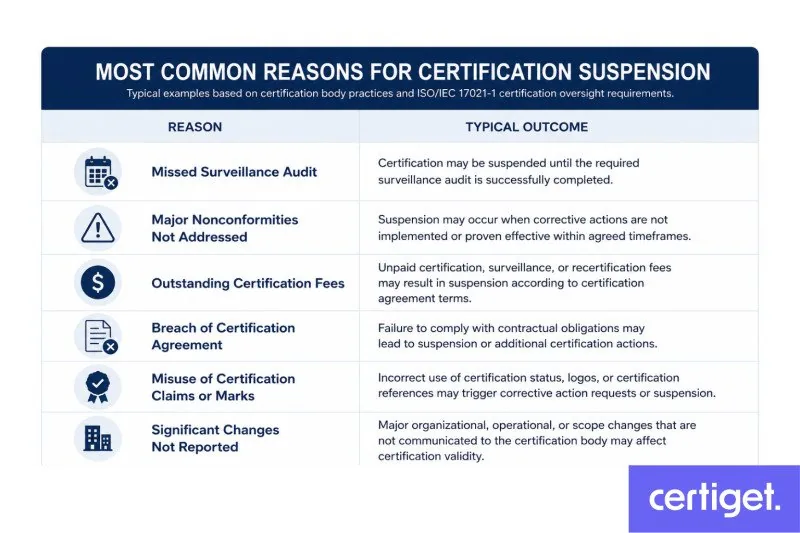
The most common reasons include:
- Failure to undergo a surveillance audit within the required timeframe.
- Failure to adequately address identified nonconformities.
- Significant deviations from the requirements of the certified standard.
- Failure to report important organizational changes affecting the certified management system.
- Improper use of the certificate or certification marks.
- Obstructing or preventing audit activities.
- Breach of the certification agreement.
- Outstanding payments for certification services.
In practice, administrative and contractual issues are often more common causes of certificate suspension than actual failures of the management system itself.
Is Certification Withdrawal Common?
No.
Most certification bodies aim to resolve issues through corrective actions and temporary suspension rather than withdrawing certification altogether. Certification withdrawal is typically considered a last resort when an organization fails to address the reasons for suspension, refuses to cooperate, or no longer meets the fundamental conditions required to maintain certification.
It is important to remember that certification is based on continuous surveillance and cooperation between the certified organization and the certification body. The objective is not to withdraw certificates but to verify that the management system continues to meet the requirements of the applicable standard.
What Does Certification Withdrawal Mean?
Once a certificate is withdrawn, the organization loses the right to claim certification and may be removed from public registers of certified clients maintained by the certification body.
For many organizations, this can result in the loss of contracts, difficulties in tendering processes, or failure to meet customer and business partner requirements.
How Can Organizations Avoid Certification Problems?
Based on Certiget’s experience, the following practices are particularly important:
- Participating in surveillance audits on time.
- Addressing identified nonconformities promptly.
- Informing the certification body about significant organizational changes.
- Complying with the terms of the certification agreement.
- Maintaining regular communication with the certification body.
Organizations that view certification as part of a long-term management approach rather than a one-time project rarely encounter issues leading to certificate suspension or withdrawal.
If you are planning to obtain ISO certification, change your certification body, or compare certification options available on the market, visit certiget.pl and certiget.eu. Certiget provides a comprehensive directory of management system certification bodies from around the world, enabling organizations to compare certification bodies, verify accreditations, and benefit from independent, market-based certification optimization.